Projects
/
Altra-1 Low Altitude Satelite
Completed
Monitoring
2024 — 2024
Altra-1 Low Altitude Satellite
Miniature High-Altitude Atmospheric Satellite for Real-Time LoRa Telemetry Tracking.
Overview
ALTRA-1 is a high-precision, mini atmospheric research satellite engineered to capture and transmit
real-time environmental telemetry during high-altitude ascents. Designed to be attached to a standard
meteorological weather balloon, the payload continuously monitors critical upper-air variables and
streams the datasets directly to a localized ground station for tracking, mapping, and climate analysis.
By integrating low-power, long-range wireless communication with highly accurate atmospheric sensors,
ALTRA-1 serves as a dependable, lightweight mobile sensor node capable of operating across expansive
vertical profiles, providing researchers with instant visibility into localized weather systems and
stratospheric layers.
Components & Hardware
- Arduino Microcontroller – The central computing core that handles sensor data polling, processing, packet packaging, and LoRa transmission timing routines.
- LoRa Wireless Module – A long-range, low-power radio transceiver responsible for broadcasting real-time telemetry packets from high altitudes back to the ground station.
- BME280 Sensor Array – An integrated environmental sensor that measures barometric pressure, temperature, and altitude variations with exceptional precision.
- SHT31 Sensor – A secondary, high-reliability relative humidity and temperature sensor utilized for redundant ambient air profiling and environmental data validation.
- GPS Receiver Module – Provides real-time geospatial coordinate mapping (latitude and longitude), accurate speed tracking, and absolute altitude verification.
- High-Capacity Battery Pack – A thermal-insulated power source calibrated to maintain continuous, stable power delivery in sub-zero high-altitude environments.
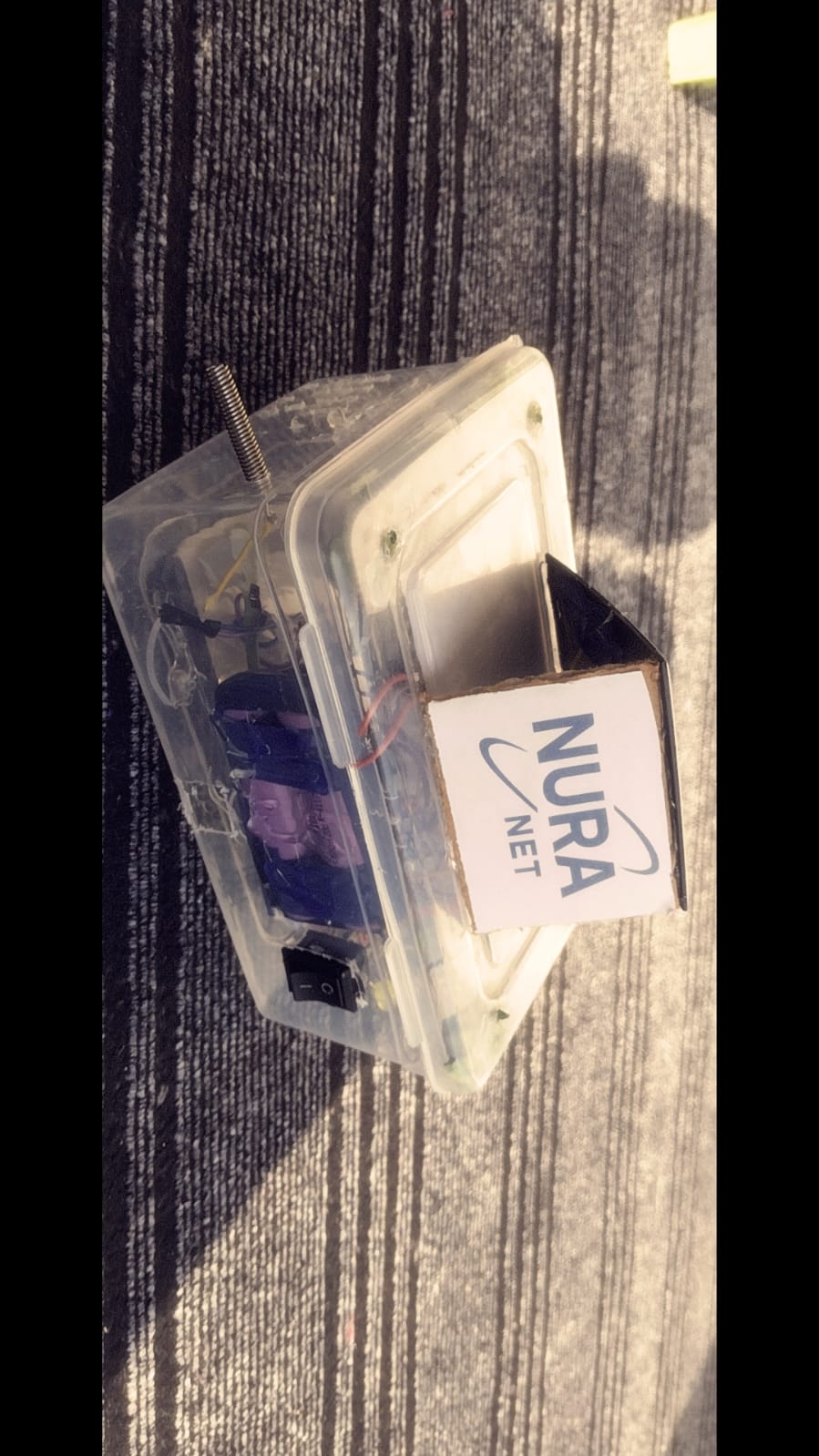
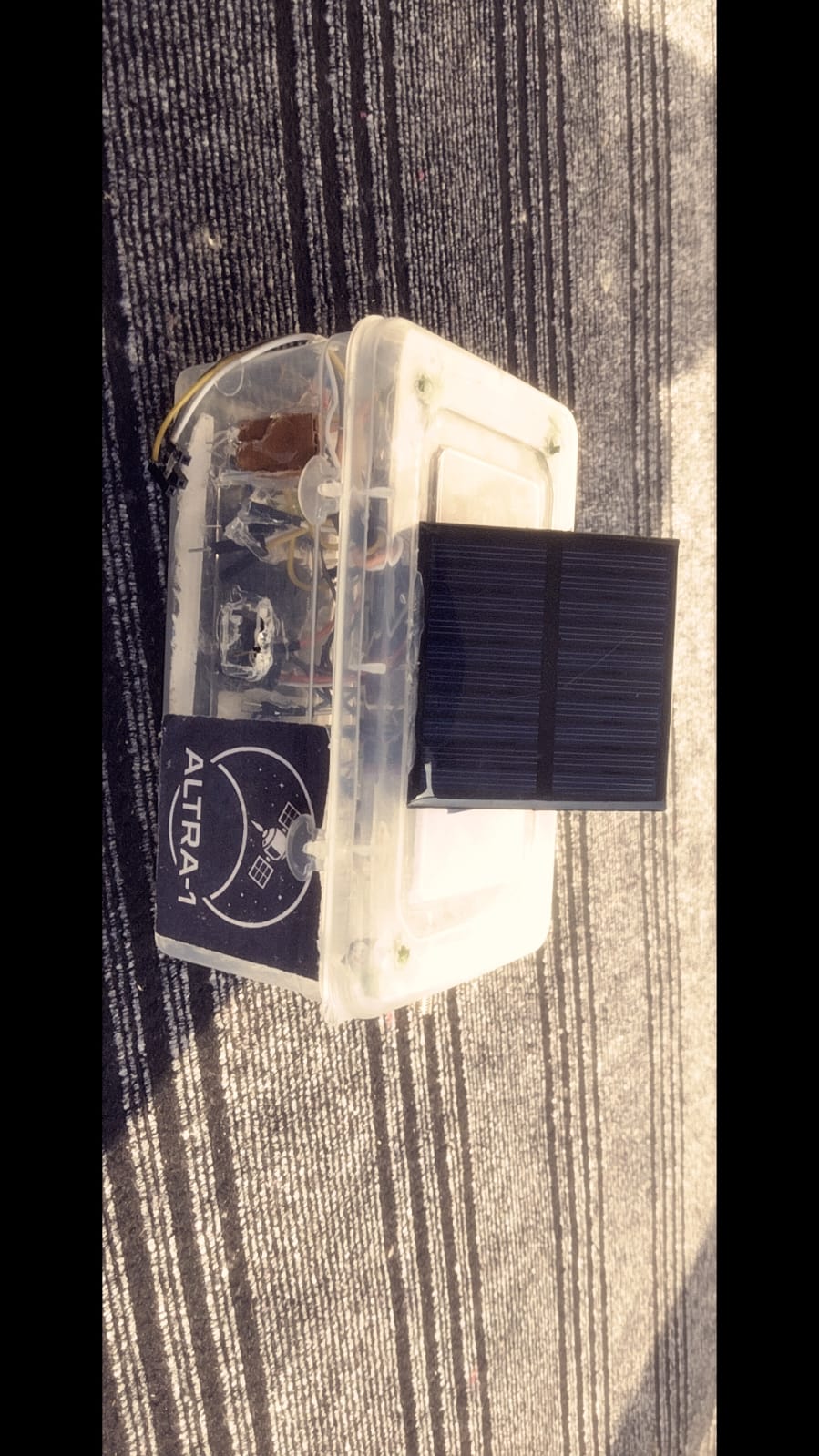
- Integrated Solar Array – Top-mounted photovoltaic panels configured to harvest solar energy during flight, continually recharging the internal power cell for maximized mission runtime.
Design & Engineering Process
The development of ALTRA-1 focused on minimizing structural mass while maximizing structural and radio resilience.
The engineering process balanced the power budget of continuous data transmission against the extreme freezing
temperatures encountered during weather balloon ascents.
- Defining mechanical payload dimensions and weight limits to match standard weather balloon lifting capacities.
- Interfacing the BME280 and SHT31 sensors over an I2C communication bus to optimize wire routing and processing efficiency.
- Configuring the GPS module to accurately maintain data strings while navigating high-velocity high-altitude winds.
- Optimizing the LoRa transmission frequency, spreading factor, and bandwidth to ensure reliable long-range line-of-sight telemetry.
- Developing bare-metal firmware to package disparate sensor points into small, compressed, and secure data packets.
- Designing a thermally insulated, shock-resistant payload enclosure to survive sub-zero stratospheric conditions and eventual landing impact.
- Conducting pre-launch calibration testing, vacuum-chamber thermal testing, and ground-range radio validation.
Applications & Use Cases
ALTRA-1 provides a scalable and cost-effective mechanism for vertical atmospheric sounding, acting as a critical
tool for localized research institutes and meteorological agencies.
- High-Altitude Meteorological Profiling & Weather Forecasting
- Real-Time Stratospheric Thermal & Humidity Gradient Analysis
- Localized Micro-Climate Studies and Atmospheric Boundary Layer Mapping
- Low-Cost Aerospace Telemetry Testing & Radio Range Validation
- Educational Space Research Simulations and Weather Balloon Tracking Operations