Overview Video



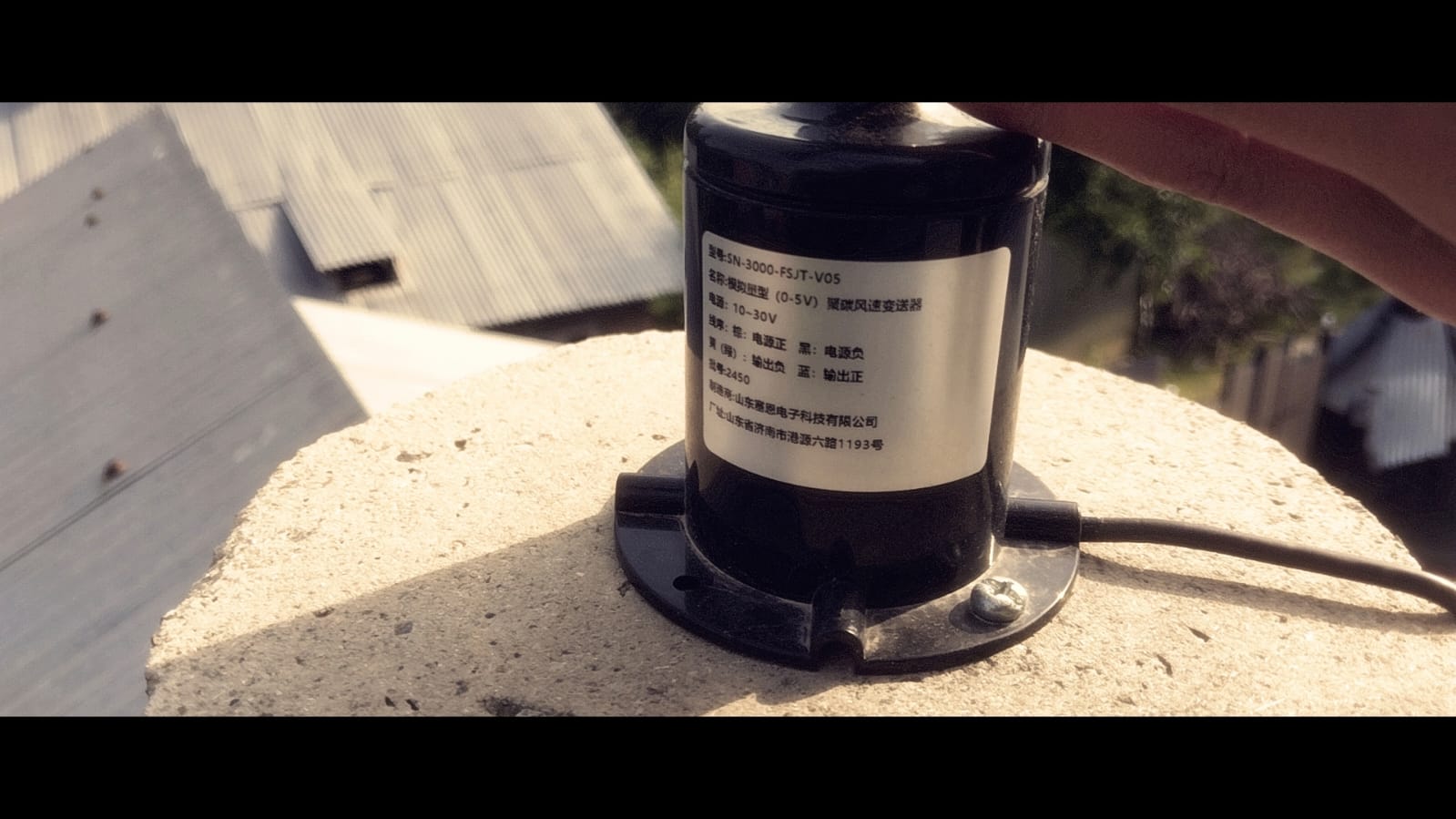
Wind Monitoring Station
Wind Monitoring Station - Real-Time Wind Speed Analysis
Overview
The Wind Monitoring Station is a high-precision meteorological logging platform engineered to track, analyze, and stream real-time wind speed dynamics. Installed as a localized tracking node in Tragpora, the station serves as a dedicated asset for micro-climate research and high-frequency weather forecasting, capturing immediate atmospheric changes in the regional terrain.
Utilizing an industrial-grade anemometer coupled with robust serial communication hardware, the system bridges heavy-duty outdoor sensory equipment with lean IoT microcontrollers. The station ensures rapid data digitization and continuous telemetry transmission to a centralized monitoring server, delivering verifiable wind profile datasets.
Components & Hardware
- SN-3000-FSJT-V05 Anemometer – A rugged, industrial-grade wind speed sensor mounted externally to capture precise, physical aerodynamic velocity data.
- ESP32 Microcontroller – The primary computing core that processes incoming wind telemetry, handles timing loops, and uses its integrated Wi-Fi stack to stream data to the server.
- RS485 to TTL Converter Module – A specialized hardware bridge utilizing the MAX485 architecture to convert high-noise-immunity RS485 differential signals from the anemometer into TTL logic level signals readable by the ESP32.
- LED Status Indicators – A dedicated array of light-emitting diodes providing immediate on-site visual feedback regarding network connectivity, sensor polling states, and transmission heartbeats.
- Centralized Weather Server – The remote database and visualization backend that ingests, charts, and stores historical wind velocity profiles for meteorological inspection.
Design & Engineering Process
The engineering of the Tragpora Wind Monitoring Station focused on establishing an uncorrupted, low-latency data pipeline from an industrial Modbus/RS485 sensor over to a standard cloud-connected microcontroller, ensuring structural survival and data continuity during localized windstorms.
- Site analysis and structural rigging planning for mounting the SN-3000-FSJT-V05 anemometer at optimal clearing heights.
- Designing the electronic interface loop, focusing on shielding the RS485 to TTL converter lines against electromagnetic interference.
- Developing bare-metal ESP32 firmware to decode raw serial byte arrays or analog voltage curves from the anemometer into precise wind speed metrics.
- Calibrating firmware conversion algorithms to account for mechanical friction and sensor-specific scaling factors.
- Implementing asynchronous data uploading loops to maintain real-time server tracking without blocking local sensor polling routines.
- Programming defensive reconnect protocols to automatically restore Wi-Fi and API server connections during local network drops.
- Integrating diagnostic LED indicator logic to quickly isolate hardware, power, or transmission errors during manual field inspection.
Applications & Use Cases
This localized anemometry system provides critical telemetry essential for regional safety, micro-grid planning, and precise atmospheric research.
- Hyperlocal Meteorological Research & Severe Weather Warning In Tragpora
- Micro-Climate Wind Pattern Mapping and Historical Atmospheric Profile Data Logging
- Feasibility Assessment Data Sourcing for Residential Wind Turbine & Green Energy Integration
- Agricultural Safety Monitoring for High-Wind Crop Protection and Spray Optimization
- Regional Drone, UAV, or Weather Balloon Launch Window Safety Verification