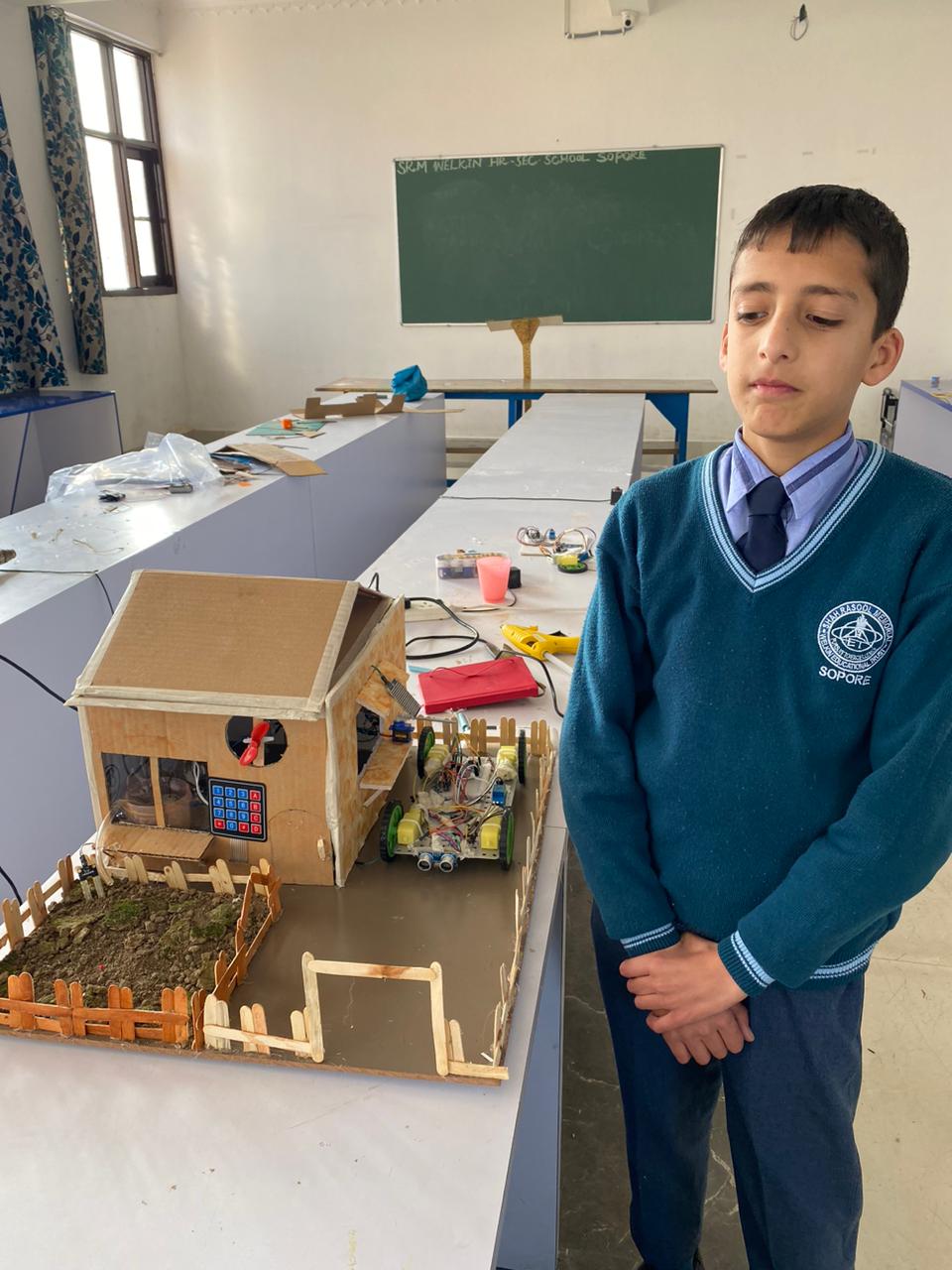
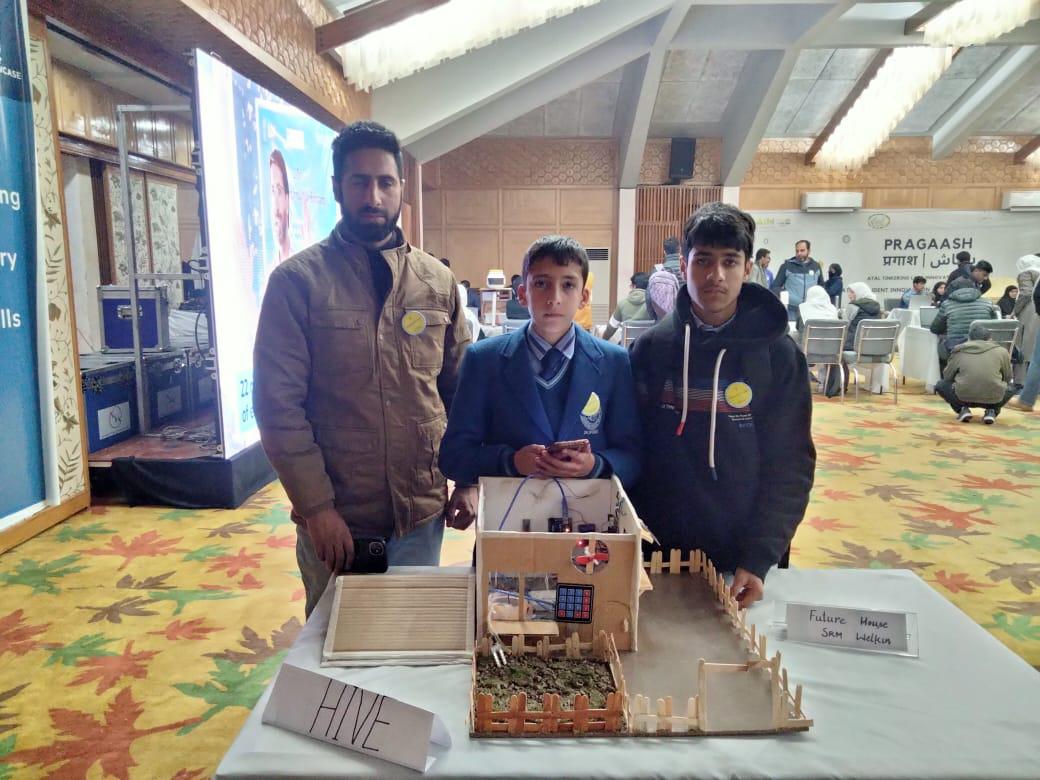
Completed
Smart Technologies
2022— 2022
Smart House
Bluetooth-Enabled IoT Home Automation Matrix with Automated Environmental Safety Interlocking
Overview
The Smart House Automation Prototype is a high-fidelity, micro-architectural IoT model designed to demonstrate
advanced residential logistics, multi-layered structural security, and automated environmental hazard mitigation.
The system couples a decentralized microcontroller backbone with an array of industrial-grade telemetry sensors
to continuously sample interior atmospheric states, establish secure edge-access boundaries, and execute real-time
over-the-air utility overrides.
By integrating a dedicated local wireless communication bridge alongside physical matrix inputs, the ecosystem provides
users with absolute localized autonomy over structural assets. The platform acts as a functional hardware
proof-of-concept, establishing the technical data loops and sensory baselines necessary to scale embedded smart-home topologies
up to full-scale residential infrastructure deployments.
Components & Architecture
-
Arduino Mega/Uno Core Processing Unit – The central embedded computing matrix responsible for running the bare-metal control loop, processing multi-channel analog sensor signals, and driving active logic state switches.
-
HC-05 Bluetooth Wireless Telemetry Module – A localized RF transceiver configured to link the micro-controller to a mobile client dashboard, enabling encrypted, wireless control of interior lights, peripheral gates, and physical security overrides.
-
MQ-Series Hazardous Gas Detection Sensor – A high-sensitivity electrochemical gas sensor deployed inside the structure to track airborne combustible elements, smoke, LPG leakage, or toxic gas spikes.
-
High-RPM Forced-Air Exhaust Fan – A localized ventilation system embedded directly into the structural housing to force active indoor-outdoor air exchange immediately upon hazard detection.
-
Multi-Channel 5V Electromagnetic Relay Module – The high-voltage isolation gate that allows low-power microcontroller logic to safely switch inductive structural elements, active light arrays, cooling units, and auxiliary mechanical appliances.
-
4x4 Matrix Membrane Keypad Lock System – A physical, tactile edge-access peripheral mounted directly onto the exterior wall interface to handle localized password validation and security lock state adjustments.
-
Micro Servo-Driven Electronic Deadbolt – A high-torque mechanical actuator wired to the controller that simulates structural automated door-locking mechanisms upon valid keypad or mobile command authorization.
-
Dynamic Peripheral Subsystems & Expansion Links – Integrated support arrays including analog thermal sensors, custom visual LED status bars, audio piezo alert buzzers, and automated secondary transport docking gates to expand modular house functionality.
Design & Engineering Process
The prototyping phase for the Smart House system focused on establishing seamless safety override priorities, low-latency localized peripheral responses, and compact hardware cable management.
-
Interrupt-Driven Safety Interlocking – Engineering a firmware-level hazard override loop where the MQ gas sensor readings take absolute script priority, automatically firing the relay to spin up the high-RPM exhaust fan regardless of ongoing secondary tasks.
-
Matrix Scanning Optimization – Implementing debounced keypad scanning routines to prevent false-triggering, signal noise, or timing overlaps when processing physical user inputs via the 4x4 membrane matrix.
-
Wireless Command Deserialization – Structuring clean, low-overhead string-parsing routines over serial communication paths to handle inbound mobile control data packets smoothly via the HC-05 Bluetooth link.
-
Inductive Load Isolation – Wiring dedicated optocoupler-isolated relays to prevent back-EMF spikes from the exhaust fan motor or actuators from causing system freezes or resetting the core Arduino processor.
-
Structural Form-Factor Layout – Engineering an organized dual-zone miniature perimeter featuring a dedicated indoor living workspace and an adjacent smart transport garage docking zone to evaluate multi-vehicle telemetry integration.
Applications & Use Cases
This automated micro-scale structural ecosystem serves as a direct training, evaluation, and development framework across modern IoT deployment tracks.
- Hyperlocal Environmental Monitoring and Automated Fire/Gas Mitigation System Testing
- Decentralized Keyless Perimeter Access Control and Smart-Lock Security Research
- Educational STEM Lab Demonstrations Highlighting Multi-Peripheral Interfacing and Relay Isolation Loops
- Low-Power Off-Grid Smart-Home Automation Architectural Layout Validation Nodes